
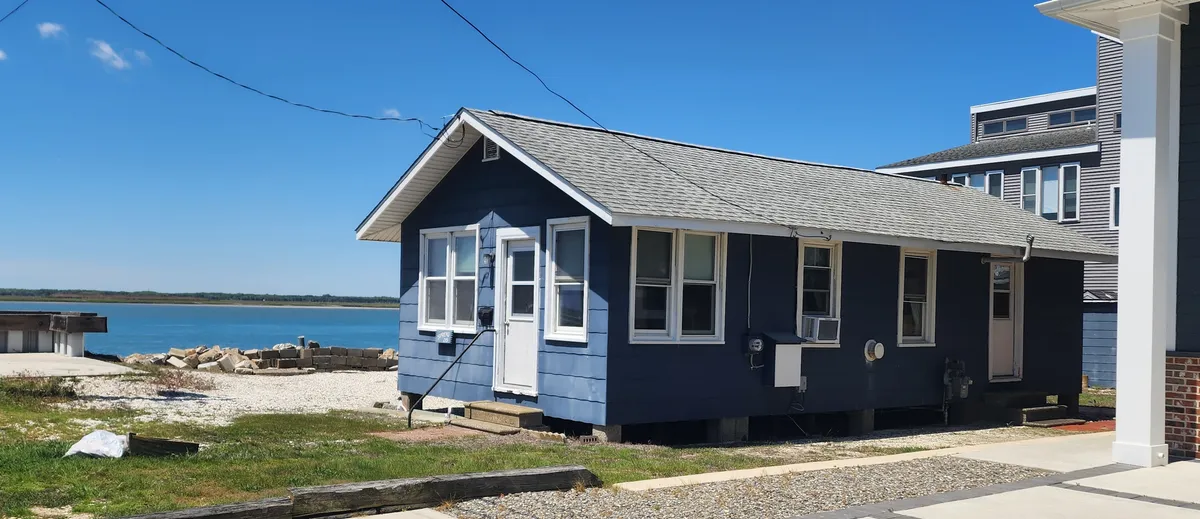
If you've tried selling, renovating, or even just looking at property in New Jersey lately — especially anywhere in Atlantic County or along the South Jersey coast — odds are you've started hearing terms like:
"CAFE elevation." "Climate-adjusted flood zones." "Inundation Risk Zone." "REAL rule." "DEP compliance."
Most people hear that stuff and immediately think it has nothing to do with them. It sounds like something for engineers, attorneys, and developers — not homeowners or local investors.
But these changes matter. A lot.
And they're already showing up in real conversations across South Jersey, even when nobody actually says the names out loud.
They affect:
- renovation costs
- insurance conversations
- permitting timelines
- construction requirements
- which properties get developed
- and what investors are realistically willing to pay for certain houses
This isn't a fear piece, and it isn't a sales pitch. It's an honest breakdown of what's happening, why it matters for both sides of the table, and how it's quietly changing the way real estate deals get done in New Jersey.
Where This All Started: NJ PACT
To get what's going on with the new flood rules, it helps to know where they came from.
A few years back, the state launched a broader initiative called NJ PACT — short for New Jersey Protecting Against Climate Threats. It's basically the umbrella program the Department of Environmental Protection (DEP) has been working under to update older land-use, flood, and stormwater rules that were written before modern climate data even existed.
A lot of New Jersey's existing flood standards were built on rainfall data collected through the 70s, 80s, and 90s.
The state's thinking is pretty simple:
Storms have changed, sea levels have shifted, and rules built around the old numbers don't really reflect what's actually happening now.
Out of NJ PACT came two big pieces that are reshaping real estate conversations:
- The Inland Flood Protection Rule
- The REAL rule, which introduced the Climate-Adjusted Flood Elevation (CAFE) standards
Both deserve a calm, honest explanation.
The Inland Flood Protection Rule
This was the first major piece, and it's the one most homeowners have already bumped into without realizing it — usually when trying to permit a project anywhere near a river, stream, or floodplain.
Here's what it does in plain English:
- Raises design flood elevation requirements in many inland flood hazard areas
- Uses updated climate-informed precipitation projections
- Requires higher elevations for certain structures
- Expands stormwater management rules
- Updates outdated runoff calculation standards
The rule mainly applies to new construction, substantial improvements, and certain redevelopment projects.
Here's the part that catches a lot of people off guard:
Some properties that were technically outside FEMA flood maps are now considered inside regulated flood hazard areas under DEP definitions.
That doesn't automatically mean flood insurance is required.
But it absolutely can change what gets required if somebody wants to build, expand, or heavily renovate a property.
That's where a lot of the confusion is coming from right now.
The REAL Rule and the CAFE Standard
The REAL rule is the coastal companion to the Inland Flood Protection Rule, and it's the bigger one for South Jersey.
At the center of it is the Climate-Adjusted Flood Elevation standard.
In simple terms: some properties in coastal and tidal areas may now need to be built significantly higher than FEMA alone would normally require.
What that means in real life is:
- future renovations may cost more
- some projects may need additional engineering
- permitting timelines may stretch out
- substantial improvements can trigger compliance requirements
For investors, it means:
- renovation costs may be higher than they used to be
- permitting and engineering can materially change deal numbers
- projects near water may involve longer timelines and more review
What This Means for South Jersey
Atlantic County, Cape May County, Ocean County, and surrounding shore communities sit right in the middle of this shift.
Low-lying coastal towns, bay-adjacent neighborhoods, and properties near tidal waterways are the most directly affected.
Some of the things people are already running into:
- higher construction costs
- longer permitting timelines
- more engineering documentation
- tighter underwriting from buyers and rehabbers
- questions about insurability and resale value
People have a lot more to consider these days.
But none of this means South Jersey real estate is suddenly falling apart.
It just means both homeowners and investors need better information before making decisions.
The Flood Disclosure Law
Alongside all of this, New Jersey also strengthened flood disclosure requirements.
Sellers and landlords now have to disclose:
- certain FEMA flood zone information
- known flooding history
- prior flood damage
- flood insurance requirements
- previous flood assistance claims
For homeowners, flood history isn't really something that can quietly stay hidden anymore.
For investors, due diligence starts before the offer, not after.
Honestly, that's probably better for everyone involved.
Why Investors Are Becoming More Careful
If you've gotten an offer recently and felt like investors were asking more questions than they used to, this is part of the reason.
Buyers now have to think about:
- elevation requirements
- DEP review
- engineering costs
- stormwater regulations
- insurance concerns
- longer rehab timelines
A responsible investor should be able to explain how they reached their number. Especially now, when renovation costs, elevation requirements, and permitting timelines can change a deal fast.
Transparency matters on both sides.
Why Homeowners Shouldn't Panic
Worth saying clearly:
None of this means homes in South Jersey are suddenly worthless or unsellable.
A lot of these rules mainly affect:
- new construction
- major redevelopment
- substantial renovations
Not people quietly living in their homes.
The right response to all this isn't fear.
It's information.
Because clarity beats uncertainty every single time when it comes to making a decision.
Why Transparency Matters More Now
The rules around real estate in New Jersey have changed a lot.
That means conversations need to be more honest too.
For homeowners, that means:
- understanding the property
- asking questions
- understanding how offers are calculated
- understanding what factors affect pricing
For investors, that means:
- being upfront
- understanding the true costs involved
- not pretending difficult projects are simple
- walking away from deals that genuinely don't make sense
The old way of throwing out vague offers and saying "trust me" doesn't really fly anymore.
And honestly, that's a good thing.
Homeowners and investors are two sides of the same coin. The more transparent the conversation is between both sides, the better the outcome usually is for everyone involved.
Final Thoughts
The flood rule changes happening in New Jersey are real, and they're already affecting conversations across South Jersey real estate.
But they aren't a reason for panic.
They're a reason for clarity.
Whether you're a homeowner trying to understand what these changes mean for your property, or an investor trying to understand the real numbers behind a project, better information leads to better decisions.
That's how this business should work.
Two sides. One coin.
Better information. Better conversations. Better outcomes.