
The economic history of Atlantic City is largely a casino story.
For decades, the fortunes of the city's residential real estate market moved with the gaming industry — up when casino revenue was strong, under pressure when the industry contracted.
The Stockton University Atlantic City campus is the most credible structural diversification of that story in a long time. And for homeowners and anyone watching the Atlantic City real estate market, it's worth understanding what that actually means in concrete terms.
The Anchor Tenant Effect
Urban economists use the term "anchor tenant" to describe a significant institutional presence that stabilizes or activates surrounding economic activity.
In commercial real estate, a major grocery store or department store is an anchor for a shopping center — not just because of what it does directly, but because of the adjacent activity it creates and the signal it sends to other businesses considering the area.
Universities function as anchor tenants in neighborhoods. They create consistent daily foot traffic from students, faculty, and staff. They generate demand for housing, food, services, and retail in the surrounding area. They signal that an institution with long-term commitments has concluded the area is viable.
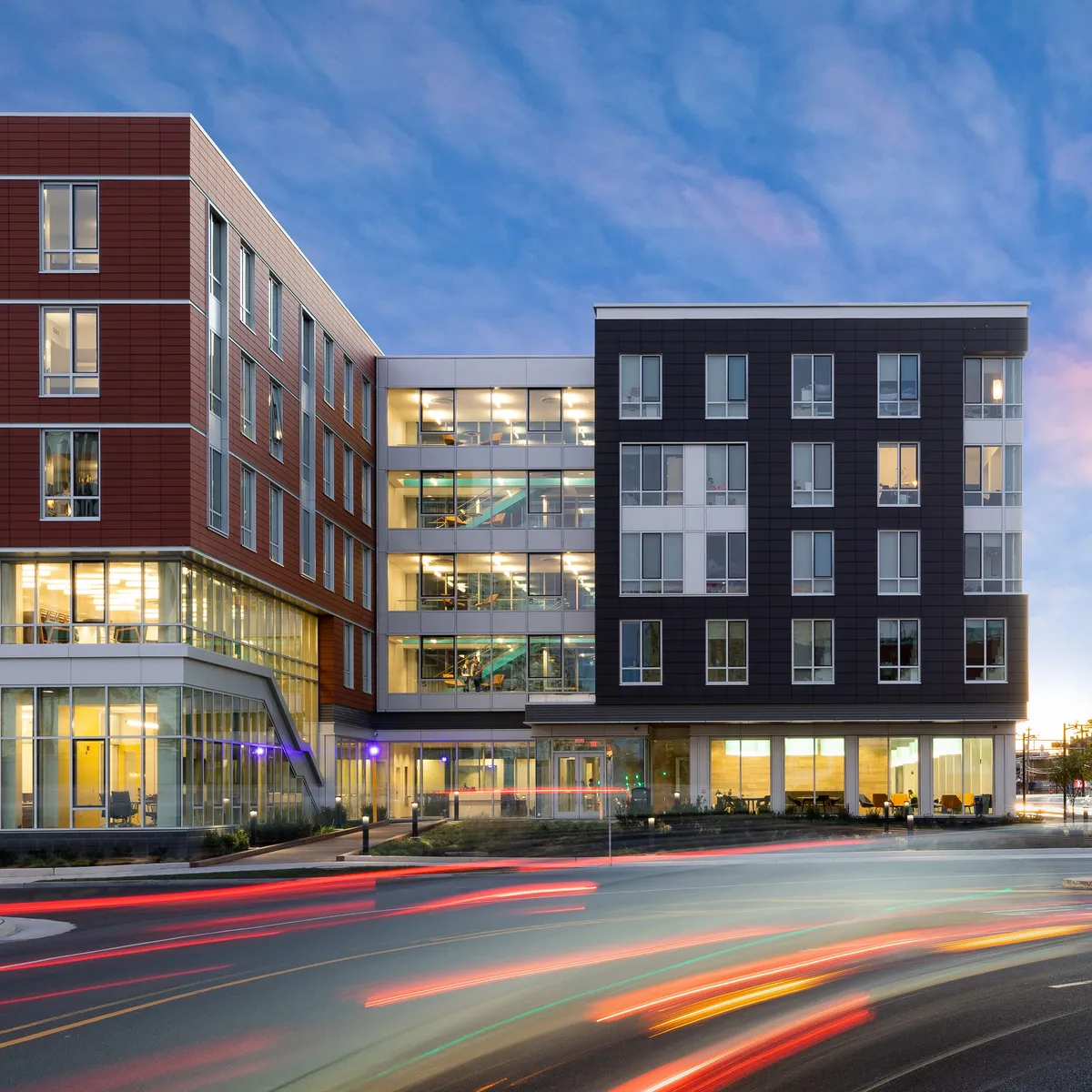
Stockton University's Atlantic City campus — which opened in the Gardner's Basin area near the inlet, adjacent to the developing arts and student housing district — is bringing that anchor dynamic to an Atlantic City neighborhood that previously lacked it.
The 1st Ward and the Northside
The areas adjacent to and surrounding the Stockton campus include neighborhoods that have historically been underinvested compared to the Boardwalk corridor and the beach communities.
The 1st Ward in particular has seen the most concentrated redevelopment activity — in part because it's the natural growth area for the university campus's footprint and in part because CRDA investment has been directed there in recent years.
For homeowners in the Northside and 1st Ward neighborhoods, the Stockton expansion is one of the clearest signals of organized, institutional investment in their part of the city. That signal matters to buyers — both residents and investors — evaluating whether to commit to properties in those neighborhoods.
The Arts and Cultural Dimension
The Noyes Arts Garage, operated by Stockton and located in the same general corridor as the main campus, is part of the broader cultural infrastructure that the university has brought to this part of the city.
Arts district development in urban real estate has a documented effect on adjacent property values. The mechanism is partly direct (foot traffic, destination activity) and partly about the buyer and renter profile attracted to areas with cultural assets.
In Atlantic City, where the entertainment and cultural conversation has historically been anchored to the Boardwalk, the emergence of an arts corridor in the Inlet/Gardner's Basin area represents a meaningful geographic diversification of the city's attractions.
For homeowners near this corridor, the question is whether the development activity is durable — whether the arts and university presence creates a sustained, multi-decade anchor or a shorter-term surge.
The evidence from comparable university neighborhoods in other cities generally supports durability. University campuses don't relocate on short notice, and the student population creates continuous, predictable demand.
The Chelsea and Orange Loop Connection
Atlantic City's redevelopment activity isn't concentrated in a single area. The Chelsea and Orange Loop revitalization corridors represent a different part of the city's development story — focused on commercial and hospitality activity rather than the educational and cultural anchor that Stockton represents.
These parallel development threads together describe a city that is genuinely diversifying its economic base, even if the pace and certainty of that diversification is uneven.
For homeowners making decisions about properties in specific neighborhoods, the relevant question is which development signal applies to their area — whether they're adjacent to the university corridor, the casino/Boardwalk activity, the revitalization corridors, or none of the above.
The CRDA project pipeline is publicly available and describes where organized investment is being directed. Homeowners who review that information before making decisions about their properties are working with better information than those who rely only on broad market headlines.
What This Doesn't Mean
The Stockton University expansion is a positive signal for Atlantic City real estate. It's not a uniform rising tide.
Properties near the university corridor are more directly affected than properties further away. Neighborhoods where neither the university nor CRDA nor revitalization activity is present are operating under different dynamics.
The casino economy remains the city's dominant economic driver, and its cycles continue to influence the overall employment and buyer pool picture — as we discussed in our piece on what the casino economy means for Atlantic City homeowners.
The combination of signals — university anchor, CRDA investment, arts corridor, casino diversification — describes a city that is more resilient than it was during the contraction years. That's meaningful context for homeowners making long-term decisions. It's not a claim that every Atlantic City property is heading in a uniformly positive direction.
For Homeowners Considering Their Options
If you own property in the areas adjacent to the Stockton campus or in the neighborhoods where CRDA investment is active, the development trajectory is a factor worth weighing in any timing or pricing conversation.
Properties in neighborhoods where these signals are absent require a different analysis.
The local picture in Atlantic City is more varied by neighborhood than any single summary can capture. A real conversation about a specific address — with someone who knows the development activity specifically — produces better information than general market commentary.
Island Investors NJ
Real situations. Honest conversations.
📞 (609) 800-4303 · islandinvestorsnj.com